 Top
TopThis page provides a practical reference for selecting suitable LED wavelengths and emission filters based on excitation (Ex) and emission (Em) spectra of commonly used fluorescent reagents in gel imaging and fluorescence observation.
Below is a list of commonly used fluorescent reagents and their excitation / emission characteristics. Click the spectral information button for detailed filter guidance for each reagent.
| List of Reagents / Ex-Em Wavelengths / LED Light Source / Filter Combination | |
| Below is a list of commonly used fluorescent reagents and their excitation
/ emission characteristics. Click the Spectral Info button for detailed filter guidance for each reagent. |
| Reagent | EX nm | EX (Sub) |
EM nm | spectral info |
Reagent | EX nm |
EX (Sub) |
EM nm | spectral info |
| Alexa Fluor 532 | 532 | 554 | Spectral | mCitrine | 516 | 529 | Spectral | ||
| Cy3 | 550 | 570 | Spectral | Midori Green | 490 | 290 | 530 | Spectral | |
| DsRed | 557 | 579 | Spectral | SYBR Gold | 495 | 540 | Spectral | ||
| EtBr | 300 | 518 | 605 | Spectral | SYBR Green I | 498 | 522 | Spectral | |
| FITC | 490 | 525 | Spectral | SYPRO Orange | 470 | 570 | Spectral | ||
| Flamingo | 512 | 271 | 535 | Spectral | SYPRO Red | 550 | 300 | 630 | Spectral |
| Gel Green | 250 | 500 | 530 | Spectral | SYPRO Ruby | 280 | 450 | 620 | Spectral |
| Gel Red | 270 | 510 | 600 | Spectral | TagRFP | 555 | 583 | Spectral | |
| GFP | 488 | 507 | Spectral | tdTomato | 554 | 581 | Spectral | ||
| mCherry | 580 | 610 | Spectral | YFP | 513 | 527 | Spectral |
| Additional Ex/Em Reagent List | Reagent List |
 Hover over the image to view LED and filter wavelengths Hover over the image to view LED and filter wavelengths |
For cellular labeling in fluorescence microscopy and in cell biology.
Retains sulfonic acid which is directly connected to the fluorescent. Especially bright with rhodamine derivative. The reagent with great light stability
| ||||||||||||||||||
| Excitation and emission wavelengths are very close, making it difficult to separate fluorescence emission from excitation leakage. A 505 nm LED with an SC-56 emission filter is effective. Additional filtering to block longer wavelength leakage is recommended to reduce background when used with transmitted light source. | ||||||||||||||||||

 Hover over the image to view LED and filter wavelengths |
In addition to such biological assays as immunocytochemistry, Cyanine dye fluorescence reagent is often used for labelling RNA.
| ||||||||||||||||||
| Excitation and emission wavelengths are close, making it difficult to separate fluorescence emission from excitation leakage.
A 505 nm LED with an SC-56 emission filter is effective. Additional filtering to block longer wavelength leakage is recommended to reduce background when used with transmitted light source. | ||||||||||||||||||
 Hover over the image to view LED and filter wavelengths | Exhibits strong and stable expression in bacterial cells with minimal toxicity.
| ||||||||||||||||||
| Excitation and emission peaks are close, but the spectra are broad enough that separation is relatively easier. Blue, cyan and green LEDs can be used for excitation, and a red emission filter is effective for separation. | ||||||||||||||||||
 Hover over the image to view LED and filter wavelengths | Ethidium bromide is one of the most widely used reagents for nucleic acid band staining. It is treated as hazardous waste by many organizations and requires appropriate handling and disposal.
| ||||||||||||||||||
| EtBr has a strong excitation peak in the UV region around 300 nm and can also be excited in the visible range around 480 to 520 nm. LED505 / LED530 can be used, but sufficient light intensity and effective filtering are important to reduce background glow. | ||||||||||||||||||
 Hover over the image to view LED and filter wavelengths | A type of fluorochrome widely used for microscopic observation. Often utilized for bloodstain search, dye tracking in the area of forensic medicine and serology
| ||||||||||||||||||
| The excitation peak is around 490 nm, and excitation with a 505 nm LED is possible. However, because excitation and emission wavelengths are close, background-suppression optics may be required. A high-power blue LED with an appropriate emission filter can also be effective. | ||||||||||||||||||
 Hover over the image to view LED and filter wavelengths | Low cost protein detection with simple protocol. High sensitivity and quantitatively
enables identification of protein by mass spectrometry. Compatible also with UV excitation.
| ||||||||||||||||||
| Ex 512 nm and LED505 nm can be effective. LED device with background eliminating
feature or high power blue LED & SC52 pair can also be effective since Ex/Em is close. | ||||||||||||||||||
 Hover over the image to view LED and filter wavelengths | Green fluorescent nucleic acid dye designed to replace the highly toxic
EtBr. Compare to EtBr, it is ultra-sensitive and very stable, both hydrologically
and thermally. Very simple procedures for pre or post staining
| ||||||||||||||||||
| |||||||||||||||||||
 Hover over the image to view LED and filter wavelengths | Fluorescent nucleic acid dye designed to replace the highly toxic EtBr. Compare to EtBr, it is ultra-sensitive and very stable, both hydrologically and thermally. Very simple procedures for pre or post staining.
| ||||||||||||||||||
| Wavelength characteristic is similar to EtBr. Compare to EtBr, it has more abosrption around 520 nm and thus LED light is effective. | ||||||||||||||||||
 Hover over the image to view LED and filter wavelengths | Enables real time detection without damaging cell. It also demonstrate
its function as fusion protein (GFP tag) Widely used as a tool to locate protein which is taking part in signal transaction inside the cell.
| ||||||||||||||||||
| Em/Ex peaks are close but Em is spread over to short wavelength side and Blue LED is effective | ||||||||||||||||||
 Hover over the image to view LED and filter wavelengths | Red fluorescent proteins isolated from Discosoma sp. Utilizes for fusion expression with target protein, promoter activity monitoring and bacteria expression. Takes short time for expression and stable as well.
| ||||||||||||||||||
| Em/Ex peaks are close but Em is spread over to short wavelength side and
Cyan or Green LED can be used. Excitation with Green LED and separation
with red filter is effective. | ||||||||||||||||||
 Hover over the image to view LED and filter wavelengths | mCitrine is an empty vector and gene insertion can be achieved by LIC cloning
protocol. mCitrine is highly versatile with its compatibility with many
other vector as well as usability as single expression vector.
| ||||||||||||||||||
| Ex 510m and 505 nm LED is efficient. However Ex/Em is close and may require
LED device with background eliminating features. High power blue LED with
SC52 filter is also effective. | ||||||||||||||||||
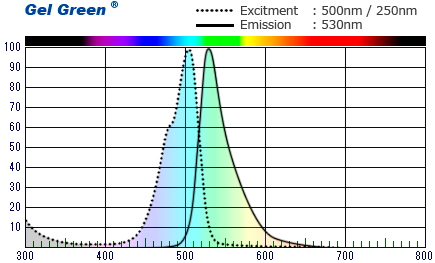
 Hover over the image to view LED and filter wavelengths | Ideal Nucleic acid staining reagent for prestained method. Low background
and high S/N ratio makes safe alternative to the ethidium bromide.
| ||||||||||||||||||
| Ralatively easy to excite with Blue LED (470m). Easy to separate since
Ex/Em peak has some space between them. | ||||||||||||||||||
 Hover over the image to view LED and filter wavelengths | Filter evaluation
| ||||||||||||||||||
| Relatively easy to excite with Blue and Cyan LED. Easy to separate since Ex/Em peak has some space between them. | ||||||||||||||||||
 Hover over the image to view LED and filter wavelengths | Asymmetrical cyanine dye used as a nucleic acid stain in molecular biology. It binds to double helix DNA and can be replacement for EtBr as it is safer to work However any small molecule capable of binding DNA with high affinity is a possible carcinogen, including SYBR Green.
| ||||||||||||||||||
| Ex is similar to SYBR Gold, however Em is adjacent to Ex and bit harder to separate. LED 505 with background eliminating features or high power blue LED & SC52 pair is also effective. | ||||||||||||||||||
 Hover over the image to view LED and filter wavelengths | Provides fast, simple, sensitive staining of proteins. Has very little protein-to-protein variation in staining. Enables long lasting and stable emission. With low background, it requires less time for cleaning gel. Detection with immunoreagent is also possible with western blotting.
| ||||||||||||||||||
| Ex is spread over to wide range and both Blue and Cyan LED are highly effective for excitation. With enough space between Ex&Em, it is relatively easy to separate too | ||||||||||||||||||
 Hover over the image to view LED and filter wavelengths | For cellular labeling in fluorescence microscopy and in cell biology. Retains sulfonic acid which is directly connected to the fluorescent. Especially bright with rhodamine derivative. The reagent with great light stability
| ||||||||||||||||||
| |||||||||||||||||||
 Hover over the image to view LED and filter wavelengths | For cellular labeling in fluorescence microscopy and in cell biology. Retains sulfonic acid which is directly connected to the fluorescent. Especially bright with rhodamine derivative. The reagent with great light stability
| ||||||||||||||||||
| With wide space between the peaks of Ex & Em, it is considered easy reagent for separation. Blue LED is most effective for excitation. Cyan LED is also effective. | ||||||||||||||||||
 Hover over the image to view LED and filter wavelengths | Generated from the wild-type RFP from sea anemone entacmaea quadricolor.
It is brightest monomeric red fluorescent protein available. Mammalian
cells transiently transfected with TagRFP expression vectors produce bright
fluorescence in 10-12 hrs after transfection.
| ||||||||||||||||||
| Cyan, or Green LED is effective for excitation. Em is too close with Green,
and background may appear with SC-56 but sould be able to separate with SC-60 since Em is spread over to long wavelength side. | ||||||||||||||||||
 Hover over the image to view LED and filter wavelengths | Exceptionally bright red fluorescent protein (2.5x brighter than EGFP)
It is easily detected as deep as 1 cm below the surface, and ideal for
live animal imaging studies. High cohesion stability make it suitable to
produce protein N-, C- fusion protein too.
| ||||||||||||||||||
| Wavelength characteristics is similar to Tag RFP and Em/Ex are close. Cyan LED & shortpass filters pair or Green LED & SC-60 filter pair should be used to eliminate background. | ||||||||||||||||||
 Hover over the image to view LED and filter wavelengths | YFP is synthetic non-aequorea fluorescent proteins that can be amplified/cut by various PCR and cloned into any other expression vector of choice. These vectors can also be used as expression vectors or as positive controls and allow monitoring of inducible protein expression.
| ||||||||||||||||||
| Ex peak at 512 nm and can be excited with 505 nm LED. However Ex/Em is close
and may require LED device with background eliminating features. High power
blue LED with SC52 filter can also be effective. | ||||||||||||||||||


 *
*


